

Will your 5G phone be future-proof? What you need to know
Volition your 5G phone be future-proof? What you demand to know
After years of being just around the corner, 5G has started to really get in, with networks expanding from testbed areas and into full rollouts. And that means 5G-gear up phones have arrived as well.
While the 5G rollout is still in its infancy in many nations, telephone makers have stepped up the pace of releasing handsets capable of connecting with the emerging wireless network. These days, well-nigh flagship phones — including the Samsung Galaxy S20, OnePlus viii Pro, and Samsung Galaxy Note xx — come with 5G connectivity. And there are at present affordable 5G phones as well, notably in the grade of the OnePlus Nord.
- What is 5G? The definitive guide to the 5G network rollout
- The all-time 5G phones yous can currently buy
- Plus: Samsung Galaxy S21 may skip one of iPhone 12'south key camera features
Ane of the biggest 5G releases of the year is nevertheless to come. Apple tree is expected to unveil its iPhone 12 lineup in the fall, and all four models rumored to exist in the works volition likely offer 5G connectivity.
Notwithstanding, not every big release these days offers 5G connectivity — the Google Pixel 4a doesn't, nor does the iPhone SE 2020 — and coverage in nations like the U.K. is patchy. So it's a valid question to wonder if 5G phones are worth getting now and whether they'll be futurity-proof. And that, dearest reader, is something we'll try to reply.
5G phones making waves
Conventional wisdom would dictate to get the best phone you tin can afford if you lot want a handset that volition last you lot a while. In that location are now stats that indicate people are keeping holding onto their phones for up to three years.
With 5G rollouts increasing in footstep, in that location's a good chance you could be in an area that has some form of 5G connectivity in the next couple of years. Then if you lot programme to buy a phone in the next vi months, it'south worth because having a 5G capable handset.
Even if you don't programme to hold onto your telephone for that long y'all might wonder if it's improve to have the pick of 5G than not? Well, sort of. The problem is that 5G networks can finer be divided into ii specific areas; sub-6GHz and millimeter wave (mmWave). The former tin encompass wide areas and is the almost prolific segment of spectrum used to ability 5G networks, while the latter offers faster download speeds but is limited in range as information technology needs a lot of base stations and antennas to create a network that'due south non blocked by buildings or other obstacles.

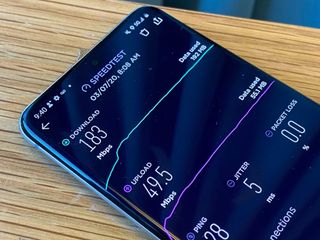
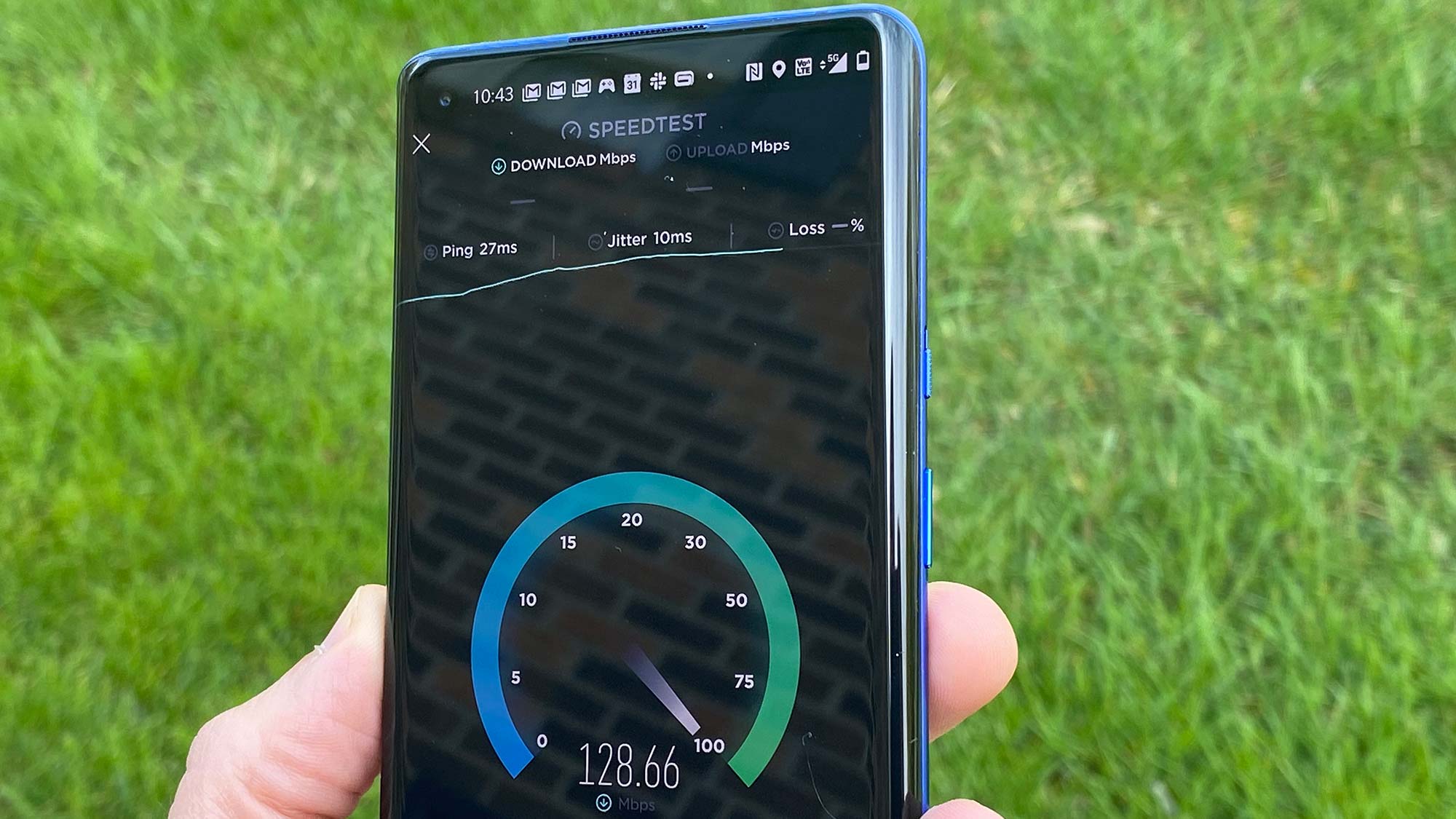
At that place'southward a lot of theoretical speeds touted for 5G across the board. Simply real-earth testing has shown that we can't become the theoretical tiptop speed of 10Gbps, though diverse data and tests bear witness that 5G is significantly faster than 4G.
Where it's available, mmWave offers the fastest 5G connection. In our testing we establish speeds topped 1Gbps, which is a far-weep away from the top theoretical speeds, but still blisteringly quick compared to 4G in real-world employ.
Still, not all 5G phones have the antennas needed to support mmWave; a lot of devices only work with sub-half dozen networks. Some phones support both networks, merely these tend to be expensive flagship devices; the OnePlus Nord, for example, doesn't support mmWave. And while the iPhone 12 volition have 5G, only the 'Pro' models are expected to support both sub-half-dozen and mmWave.
And even if you were to get a phone with the best 5G connectivity on offer, you'll probably struggle to find a mmWave network since that kind of coverage is sparse: y'all won't find a mmWave network in the UK, for example. In the United states, only Verizon has congenital its initial 5G network using mmWave; T-Mobile and AT&T have some mmWave towers, but those are limited compared to their nationwide networks.
That's not necessarily a big deal, equally Avi Greengart, lead analyst at Techsponential, told Tom's Guide that sub-6 will exist the nigh important 5G network in the near future.
"For about people in urban and suburban areas, 5G's biggest touch on will exist on mid-ring ('sub-6GHz') networks that offer meaning comeback in speeds along with excellent coverage outdoors and skilful coverage indoors," Greengart explained. "mmWave 5G performance can be spectacular, just information technology is expensive to deploy because the signals don't travel far, making it best suitable for specific spots in crowded urban areas and venues like sports stadiums."
A spectrum of spectrum
Substantially, mmWave 5G isn't going to be something you can take advantage of even if you have a compatible phone. At least not in the almost-future every bit mmWave networks aren't likely to span nations in the aforementioned mode every bit sub-vi networks.
Rather mmWave is wil likely be constrained to urban areas and used as a high-speed urban network for facilitating emergency services communication and enabling the fast and loftier bandwidth connections for things like driverless cars when they get a fully-realized reality of city send.
Even if mmWave networks are expanded beyond the concrete jungles of the likes of New Yor City and London, you shouldn't await for them to arrive. That's because it'll be a combination of different spectrum bands will be what makes up consumer-grade 5G networks for the foreseeable future. This means even if you accept a sub-6 compatible phone yous won't find yourself left behind as 5G evolves, much similar 3G networks nonetheless exist alongside 4G ones.
"The future of 5G is a combination of low-band, mid-band, and mmWave frequencies, all on standalone 5G networks. Some 5G phones purchased today will work on those future networks with but a software update, just that future is still years away," said Greengart.
But Greengart suggests information technology would exist shrewd for people considering a 5G telephone to accept a moment to sympathize what the country of 5G will be over the lifetime of their side by side handset: "Implementation too varies wildly from country to country, carrier to carrier within the country, region by region, and, in some cases, block past block. That makes information technology important for consumers ownership a phone today to empathize what technologies their carrier is likely to implement in their area over the adjacent two to 3 years that they have that telephone."
In the U.Southward., mmWave networks are further along in their deployment than in the U.Thou., but like Greengart, Ben Forest, chief of research at tech analyst business firm CCS Insight, noted that a lack of mmWave shouldn't be a concern when it comes to getting a 5G phone.
"Although it's true that the vast bulk of 5G phone available today simply back up 5G at sub-6GHz, we believe this volition be sufficient for the vast bulk of users in the UK," said Wood. "We believe mmWave engineering volition get in in the UK within the next two years, simply we don't expect widespread deployment given the small jail cell footprint and resistance to the technology based on unfounded health concerns."
"That said, we do think in the mid- to long-term mmWave will play a very important role as office of all 5G deployments, but for someone buying a phone today that'southward unlikely to exist a major consideration."
To 5G or not to 5G?
With the above in mind, you might be thinking that a 5G phone isn't necessary if you're only going to get sub-6 speeds, connectivity in express areas, and might not plan on keeping your phone for that long.
As the get-go telecoms provider to brainstorm its 5G rollout in the U.K., EE is spring to champion the move to 5G. Only David Salam, managing director of Mobile networks at EE, did note that 5G's rollout is accelerating and with that, comes more advantages to early adopters.
"EE currently has 5G in 80 large towns and cities, and we're expanding our footprint every day. Customers using our 5G network on a 5G device in those places are already enjoying the faster speeds and lower latency of 5G," said Salam. "Nosotros've seen some really exciting utilize cases within just the showtime yr of EE'south 5G network beingness switched on, from the earth's get-go augmented reality gig streamed simultaneously over 5G to 3 cities, to a remote-controlled ultrasound scan."
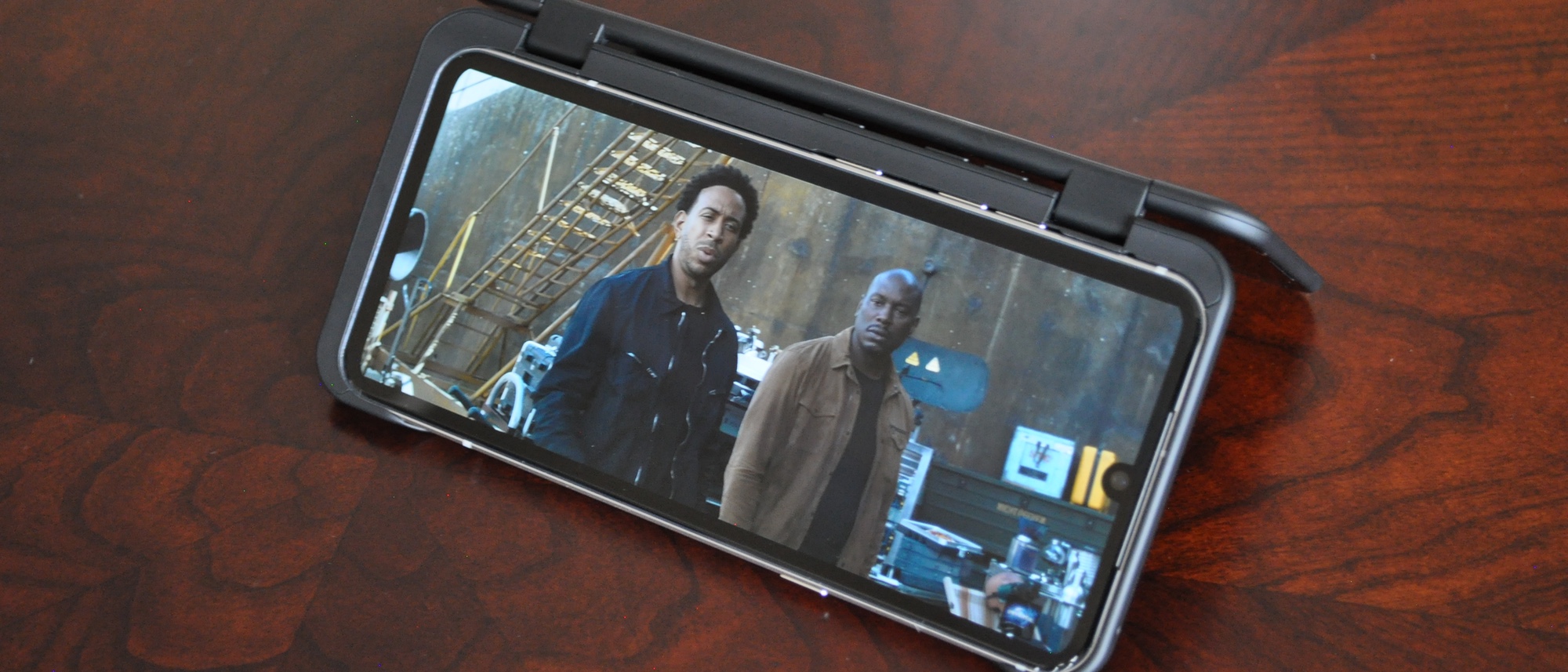
So there'due south scope for 5G to bring advantages over 4G even if various services have withal to tap into them. Every bit information technology currently stands, 5G connectivity should enable you to stream Netflix content at 4K and download big files and other things at breakneck speeds beyond a cellular connectedness. How much of an advantage you'd observe that to be over 4G — which on a proficient network tin can offer speedy connections — is downward to how you use your smartphone, and indeed how yous program to use your smartphone in the future.
If you'd be interested uploading full-resolution photos snapped in RAW format on a Milky way S20 Ultra for case, or wish to tap into Xbox game streaming thanks to Project Cloud becoming role of Xbox Game Pass Ultimate and coming to Android, then 5G could exist a benefaction.
But it doesn't really matter how you can use 5G connectivity in the here-and-now. Rather you lot'll desire to know if buying a 5G telephone now or in the next few months means yous'll have a phone that volition exist ready for what 5G has to offer in the next 2 to three years or stop upward with a handset that'll exist obsolete in 12 months.
"Given most people now proceed their mobile phone for 3 or four years it increasingly makes sense to buy a 5G-capable device," Wood told usa. "A skilful analogy is with TVs. A decade or so ago information technology would have been foolish to purchase a Tv that was not Hard disk-Ready, even if you did not accept admission to Hard disk content.
"We believe the same argument applies to 5G. Furthermore, with the introduction of 5G capable iPhones later in the year, awareness amongst consumers volition exist extremely high and it will make it harder than ever to sell a premium smartphone that does non have 5G."
With all the above taken into consideration, information technology looks like y'all can't really lose if you go a 5G phone right now. Fifty-fifty if you don't use the so-called next-generation connectivity, you'll have a phone that's ready for information technology.
So if you're in the market for a new telephone, such as the upcoming iPhone 12 or Google Pixel 5, which y'all'll want to hold onto until 2023, then you're better off getting i with 5G connectivity. And every bit 5G network rollouts gather stride more services are probable to tap into them, so being ready to take advantage of them is just patently smart thinking.

Source: https://www.tomsguide.com/features/will-your-5g-phone-be-future-proof-what-you-need-to-know
Posted by: bradleyberstionshe1989.blogspot.com
0 Response to "Will your 5G phone be future-proof? What you need to know"
Post a Comment